
Salesmen and how they get paidالمندوبون وكيف يُحتسب لهم
Two screens, and the split between them is the thing to understand: who your salespeople are is one list, and how they earn is a completely separate one. Setting up a salesman does not give them a commission, and that surprises people.
1. Salesmen - the people
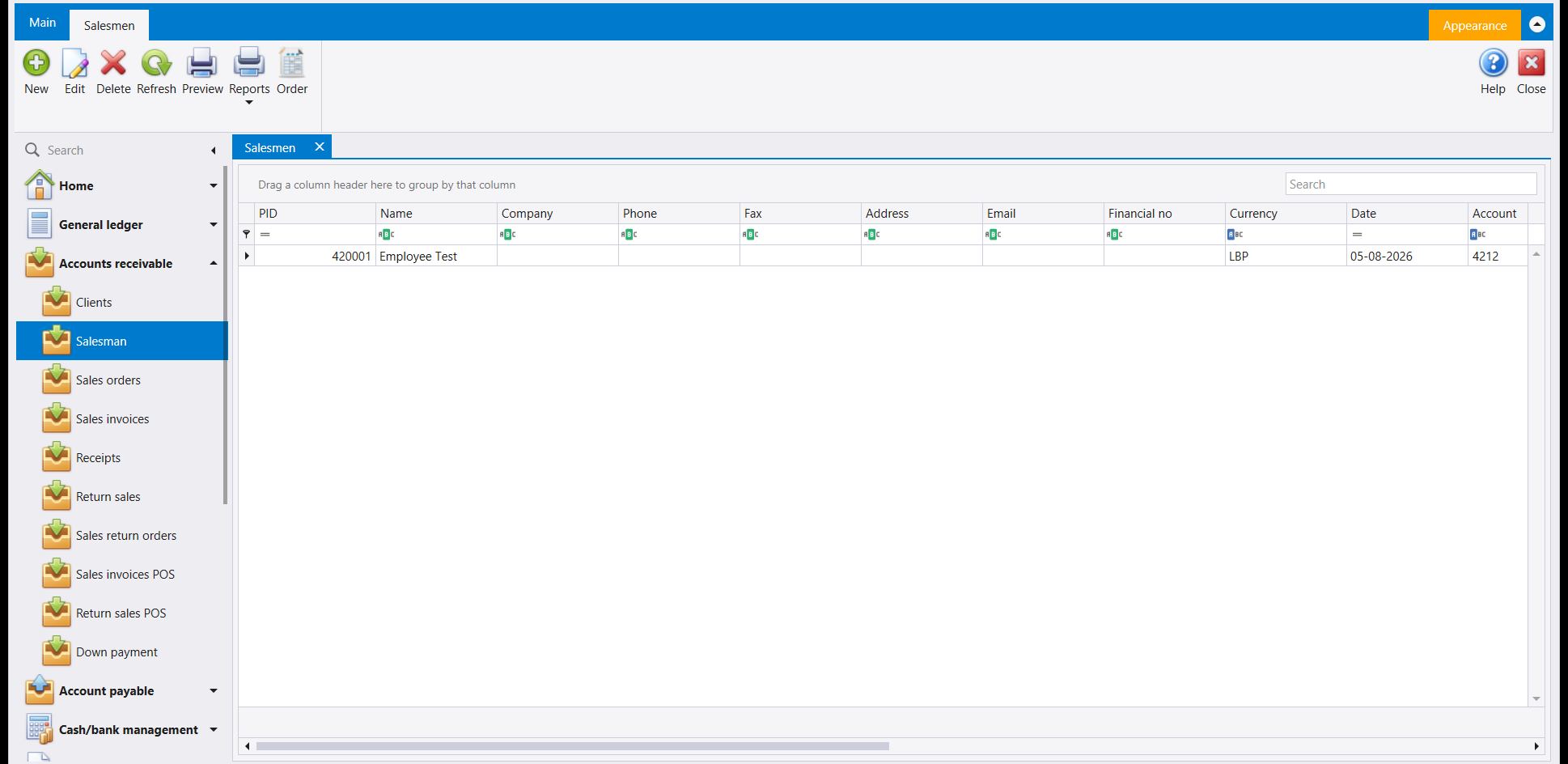
A salesman record looks like a customer record, and that is not a coincidence - it is the same kind of thing, a party your books know about.
Two columns carry the weight. Currency is what this person is settled in, and Account is where what you owe them accumulates - the row in the picture points at account 4212. Without an account there is nowhere for a commission to land, so this is the field to fill even when the rest looks optional.
Order in the ribbon sets the sequence they appear in elsewhere. It sounds cosmetic and it is not: it decides the order of the list your invoice clerks pick from, so put the busiest people first.
2. Commissions - the rules
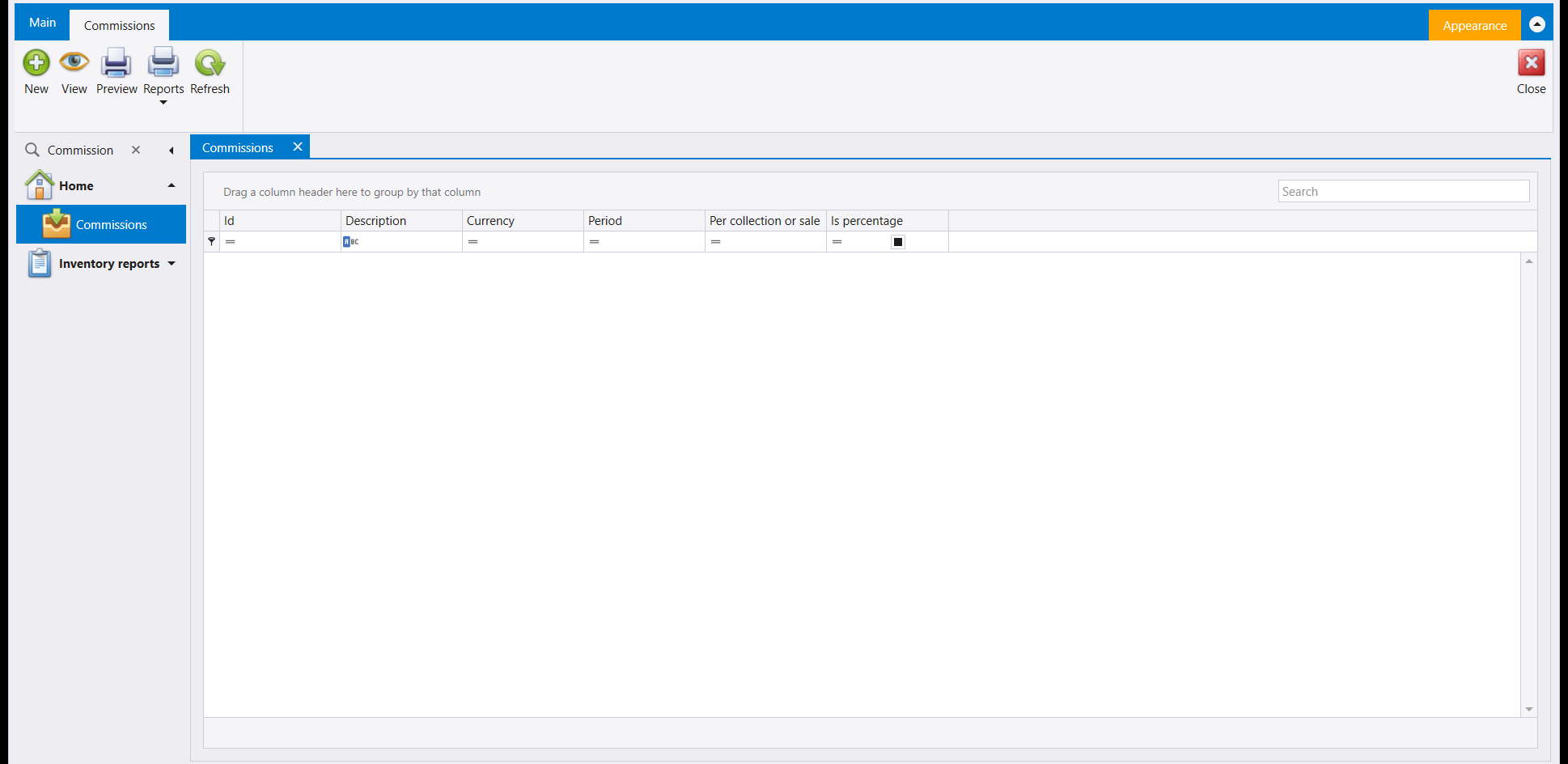
This is the separate list, and its columns are a compact statement of every choice a commission scheme has to make.
- Per collection or sale is the important one, and it is a genuine policy decision rather than a setting. Pay on sale and your salespeople are rewarded for closing; pay on collection and they are rewarded for closing deals that actually get paid. If you have a receivables problem, this column is where part of the answer lives.
- Is percentage decides whether the scheme pays a proportion or a flat amount per deal.
- Period is how often it is worked out - the rhythm the commission run follows.
- Currency is what the scheme pays in, which need not be the currency the sale was made in.
A scheme here is a rule, not a payment. Defining it does not move money; it tells Libra how to calculate when the time comes. And the grid is empty in the picture, which is the normal starting state - a company with salespeople but no schemes has simply not decided the policy yet.
شاشتان، والفصل بينهما هو ما ينبغي فهمه: فـمن هم مندوبوك قائمةٌ، وكيف يكسبون قائمةٌ أخرى منفصلة تمامًا. وتعريف المندوب لا يمنحه عمولة، وهذا يفاجئ الناس.
١. Salesmen - الأشخاص
يشبه سجلّ المندوب سجلّ الزبون، وليس ذلك مصادفة - فهو الشيء نفسه من حيث النوع، طرفٌ تعرفه دفاترك.
وعمودان يحملان الثقل. فـCurrency هي العملة التي يُسوّى بها هذا الشخص، وAccount هو حيث يتراكم ما تدين له به - والسطر في الصورة يشير إلى الحساب 4212. وبلا حساب لا موضع تقع فيه العمولة، فهذا هو الحقل الذي يُملأ ولو بدا ما عداه اختياريًا.
وOrder في الشريط يضبط الترتيب الذي يظهرون به في مواضع أخرى. ويبدو تجميليًا وليس كذلك: فهو يقرّر ترتيب القائمة التي يختار منها كتبة الفواتير، فضع الأكثر انشغالًا أولًا.
٢. Commissions - القواعد
هذه هي القائمة المنفصلة، وأعمدتها بيانٌ موجز لكل اختيار على نظام العمولة أن يتّخذه.
- Per collection or sale هو المهمّ، وهو قرار سياسة حقيقي لا مجرّد إعداد. فادفع على البيع يُكافأ مندوبوك على الإتمام؛ وادفع على التحصيل يُكافأوا على إتمام صفقات تُدفع فعلًا. وإن كانت لديك مشكلة في الذمم، فجزء من الجواب يسكن في هذا العمود.
- Is percentage يقرّر هل يدفع النظام نسبةً أم مبلغًا مقطوعًا لكل صفقة.
- Period هو كل كم تُحتسب - الإيقاع الذي تتبعه تشغيلة العمولة.
- Currency هي العملة التي يدفع بها النظام، وليس بالضرورة عملة البيع.
النظام هنا قاعدة لا دفعة. فتعريفه لا يحرّك مالًا؛ بل يخبر ليبرا كيف يحسب حين يحين الوقت. والشبكة فارغة في الصورة، وهذه هي حالة البدء الطبيعية - فالشركة التي لديها مندوبون ولا أنظمة عمولة لم تحسم السياسة بعد لا أكثر.