
Charges and requisitions: the two lists either side of a purchaseالأعباء والطلبات: القائمتان على جانبَي الشراء
Guides 43 and 44 cover the purchase documents themselves. Two more lists sit in the same group and neither is a document you would think to look for: one records what a purchase cost you beyond the supplier's price, and the other records what somebody asked you to buy before any of it started.
1. Charges - the costs that are not on the supplier's invoice
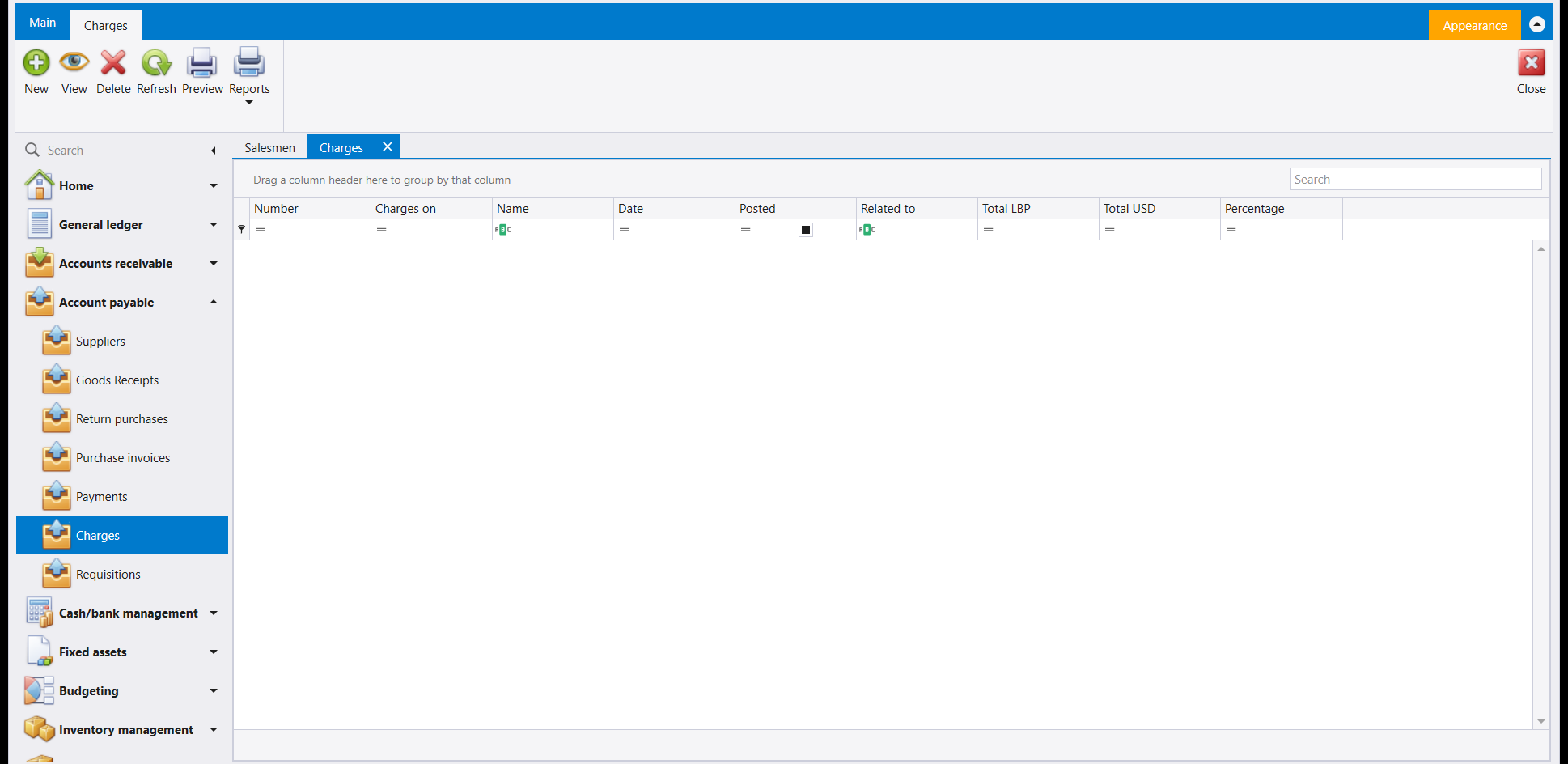
Freight, customs, clearance, insurance, handling. The supplier invoices you for the goods; these arrive separately and they are just as much part of what the goods cost.
The columns say how Libra thinks about that:
- Charges on and Related to attach the charge to what it belongs to, which is what makes it more than a stray expense. A charge tied to a shipment can be spread across what was in it.
- Percentage is how that spreading is expressed.
- Total LBP and Total USD carry the amount in both currencies - useful here in particular, because import charges are very often billed in a different currency from the goods.
- Posted is a tick box, and it is the giveaway: a charge is a document that posts to your books, not a note. Until it is posted it has not affected anything.
Enter charges before you value the stock, not after. A cost that arrives late still belongs to the goods, but by then the items may already have been sold at a margin calculated without it. This is the single most common way a purchase looks more profitable than it was.
2. Requisitions - what somebody asked for
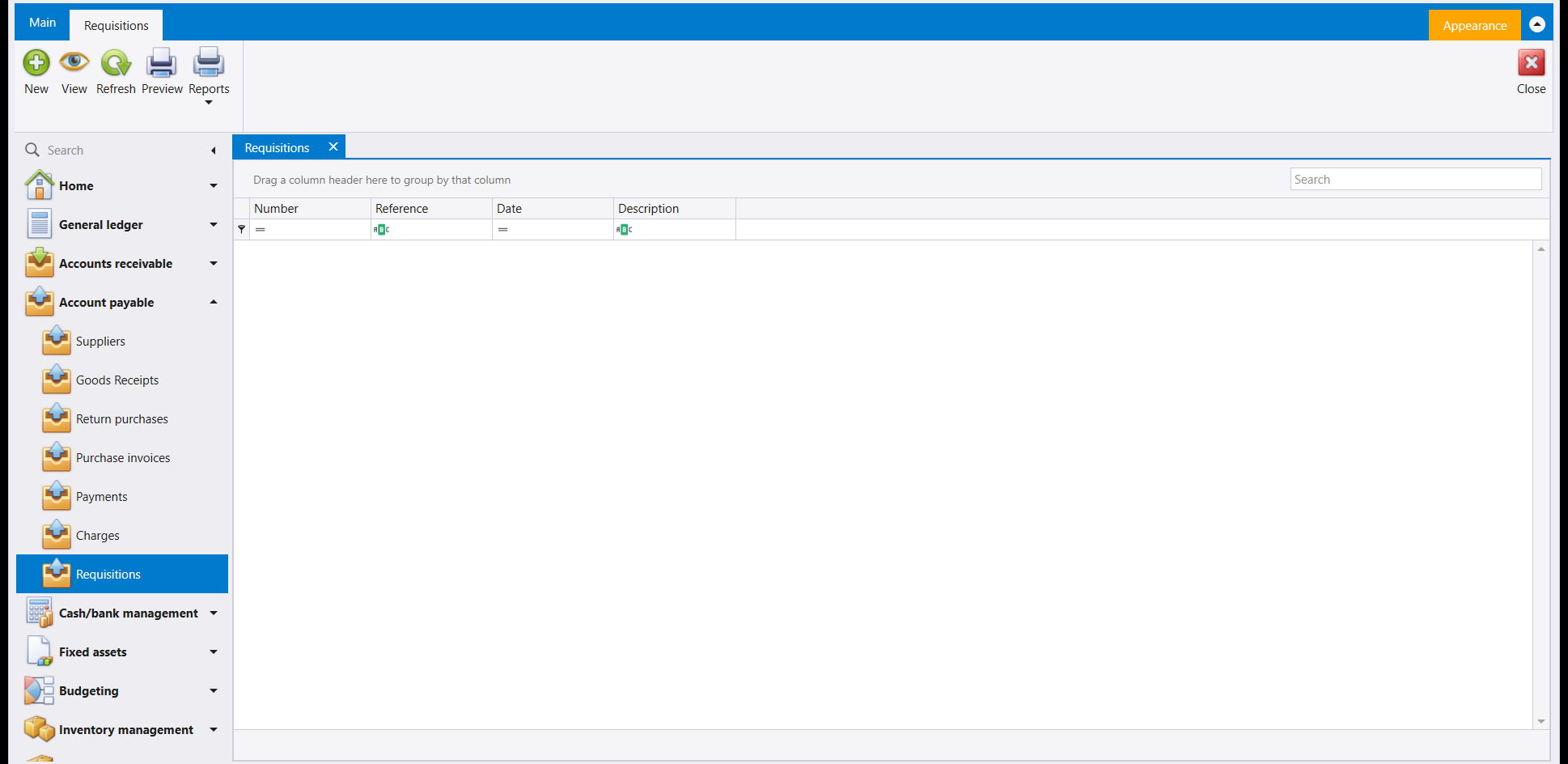
Four columns, and no money anywhere. That absence is the point: a requisition is a request, not a commitment. Somebody in the business needs something; this records the asking, and nothing is owed to anybody yet.
It sits before the purchase order in the chain - request, then order, then goods, then invoice - and its value is entirely in what it lets you answer later: who asked for this, when, and did we ever actually buy it.
Reference is the field that earns its keep. Put the requester's own document number in it - the internal ticket, the site request, the department's form - and the trail from "we need this" to "we paid for this" holds together without anyone maintaining a spreadsheet.
يغطّي الدليلان ٤٣ و٤٤ مستندات الشراء نفسها. وتجلس في المجموعة نفسها قائمتان أخريان لا تخطر لك أيٌّ منهما: إحداهما تسجّل ما كلّفك الشراء فوق ثمن المورّد، والأخرى تسجّل ما طلب منك أحدهم شراءه قبل أن يبدأ ذلك كله.
١. Charges - الكلف التي ليست على فاتورة المورّد
الشحن والجمارك والتخليص والتأمين والمناولة. فالمورّد يفوترك البضاعة؛ وهذه تصل منفصلة وهي جزء من كلفة البضاعة بالقدر نفسه.
وتقول الأعمدة كيف يفكّر ليبرا في ذلك:
- Charges on وRelated to يربطان العبء بما يخصّه، وهو ما يجعله أكثر من مصروف شارد. فالعبء المربوط بشحنة يمكن أن يُوزَّع على ما كان فيها.
- Percentage هو كيف يُعبَّر عن ذلك التوزيع.
- Total LBP وTotal USD يحملان المبلغ بالعملتين - وهو مفيد هنا خاصةً، لأن أعباء الاستيراد كثيرًا ما تُفوتر بعملة غير عملة البضاعة.
- Posted مربّع تعليم، وهو الدليل: فالعبء مستند يُقيَّد في دفاترك، لا ملاحظة. وما لم يُقيَّد فهو لم يؤثّر في شيء.
أدخِل الأعباء قبل أن تقوّم المخزون لا بعده. فالكلفة التي تصل متأخّرة تظلّ من نصيب البضاعة، لكن الأصناف قد تكون بيعت حينها بهامش حُسب دونها. وهذه أشيع طريقة يبدو بها الشراء أربح ممّا كان.
٢. Requisitions - ما طلبه أحدهم
أربعة أعمدة، ولا مال في أيّ موضع. وذلك الغياب هو المقصد: فالطلب طلبٌ لا التزام. فأحدهم في العمل يحتاج شيئًا؛ وهذا يسجّل الطلب، ولا شيء مستحقّ لأحد بعد.
وهو يقع قبل أمر الشراء في السلسلة - طلب، ثم أمر، ثم بضاعة، ثم فاتورة - وقيمته كلها فيما يتيح لك أن تجيب عنه لاحقًا: من طلب هذا، ومتى، وهل اشتريناه فعلًا أصلًا.
وReference هو الحقل الذي يستحقّ مكانه. ضع فيه رقم مستند الطالب نفسه - التذكرة الداخلية، أو طلب الموقع، أو نموذج القسم - فيتماسك الأثر من «نحتاج هذا» إلى «دفعنا ثمن هذا» دون أن يمسك أحد جدولًا.