
Production formulas, invoices & ordersتركيبات وقسائم وأوامر الإنتاج
Production has three documents, and confusing them is the single most common mistake. They look almost identical on screen. Only one of them changes your stock.
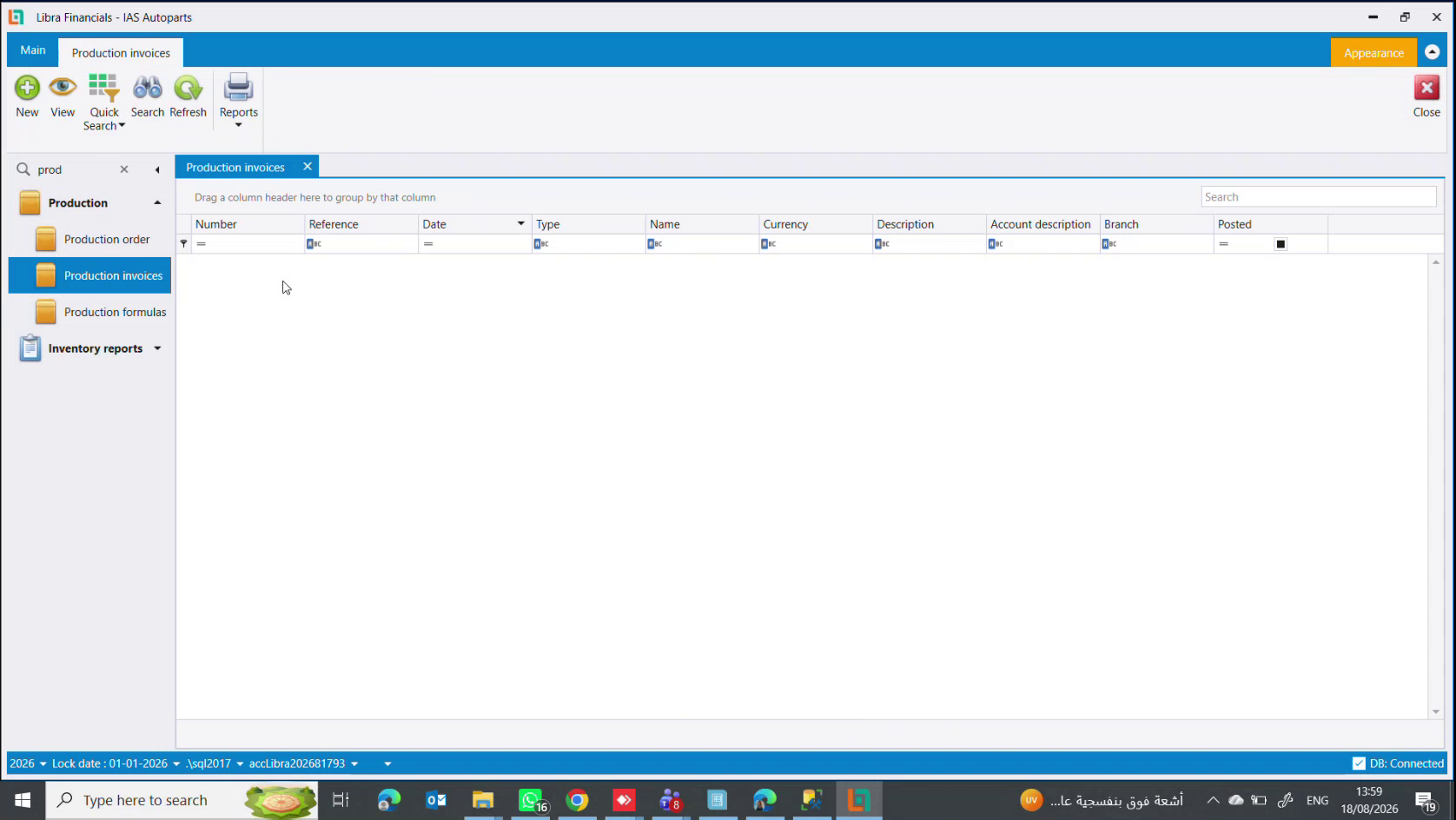
Inventory management → Production holds Production order, Production invoices and Production formulas.
The one that counts: the production invoice
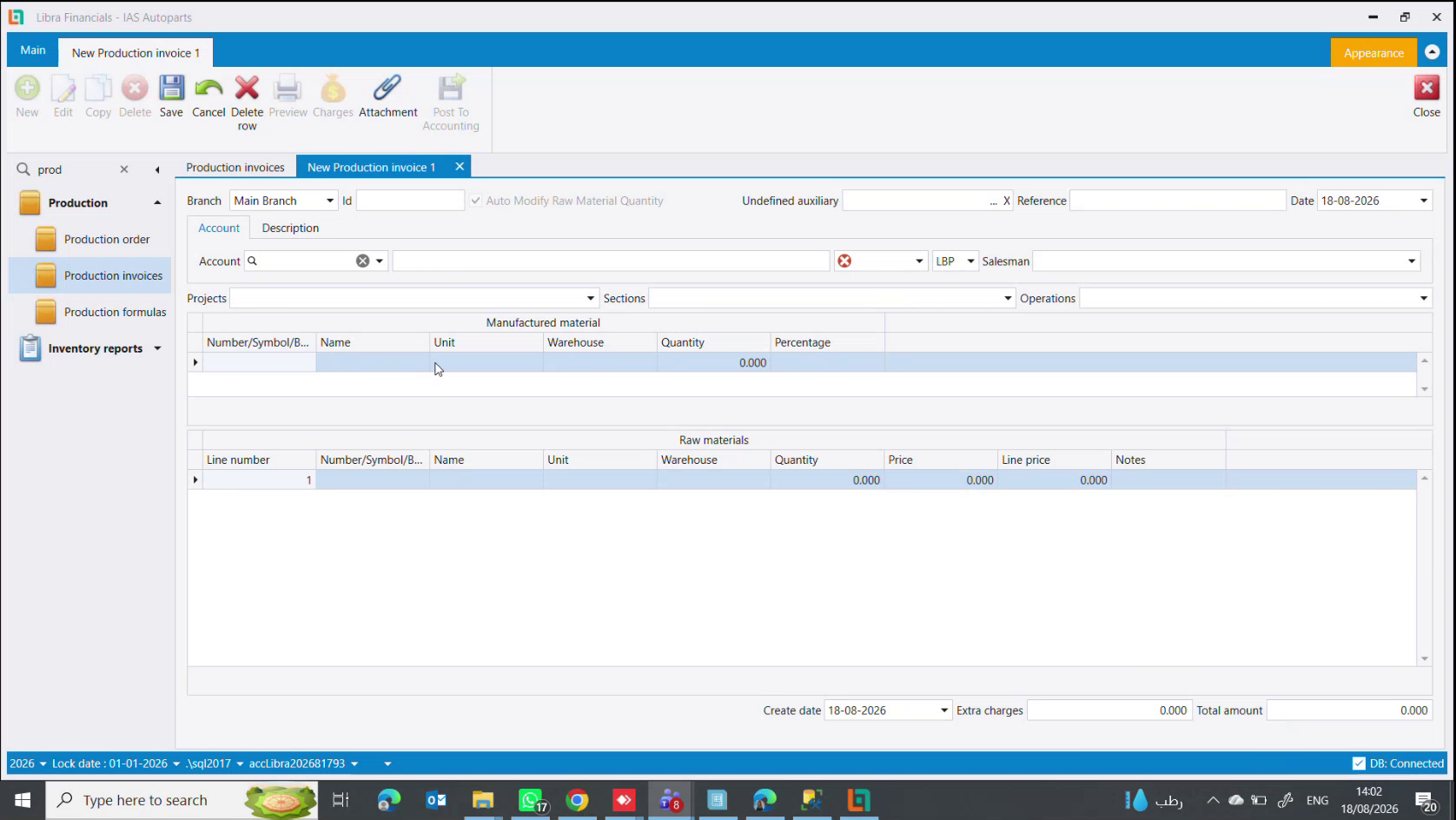
The production invoice is the document that actually happens. It consumes the raw material, creates the finished goods, gives them their cost, and moves the quantities. Everything else is preparation.
Its layout says what production is:
Manufactured materialon top - what comes out. Columns:Number/Symbol/B...,Name,Unit,Warehouse,QuantityandPercentage.Raw materialsbelow - what goes in. Columns:Line number,Number/Symbol/B...,Name,Unit,Warehouse,Quantity,Price,Line priceandNotes.
Ordinary manufacturing puts many rows below and one above. Dismantling does the reverse: one row below, many above. Same document either way - see How to dismantle a whole into parts.
The header carries Branch, Id, Reference, Date, an Account with its currency and Salesman, and the three cost centre fields Projects / Sections / Operations. At the foot, Create date, Extra charges and Total amount.
Auto Modify Raw Material Quantity links the two grids: change what you are making and the raw material needed follows.
The ribbon adds Charges, Attachment and Post To Accounting - the invoice affects stock when you save it, and the ledger when you post it.
The one that changes nothing: the formula
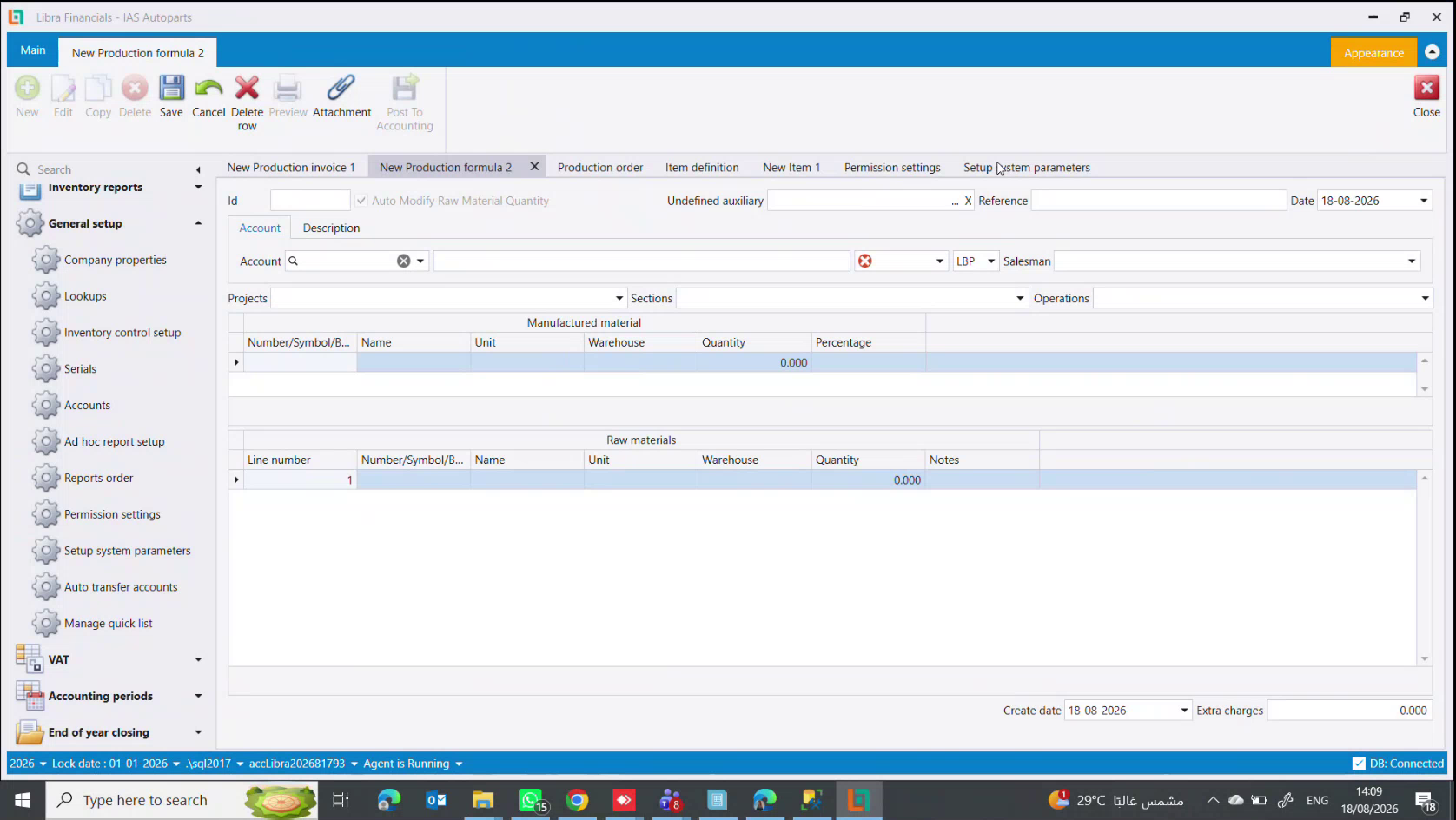
A formula is a saved recipe. Put the two screens side by side and the difference is exactly two things:
| Formula | Invoice | |
|---|---|---|
Branch in the header | absent | present |
Raw materials columns | Quantity, Notes | Quantity, Price, Line price, Notes |
That is the whole story in one observation. A formula records quantities; an invoice records money. A formula has no branch because it never happens anywhere, and no prices because it never costs anything. Saving one moves no stock and touches no account.
Use a formula when you make the same thing repeatedly - a perfume blend of 3 ml of this, 4 ml of that. When you want to actually make it, Copy the formula and Libra asks whether to duplicate it as another formula or turn it into a production invoice. Choose the invoice and it fills in the lines and prices them.
Work that is different every time needs no formula at all: build the production invoice directly. Dismantling is usually like this, because no two wrecks break down the same way.
The one that is a request: the production order
A production order is an instruction to manufacture - "make me 100 of these". It carries no stock effect either. It exists so a workshop can hold a queue of what has been asked for, and each order becomes a production invoice when the work is done.
If nobody asks you for anything in advance, you do not need orders.
Seeing the queue: the production order list
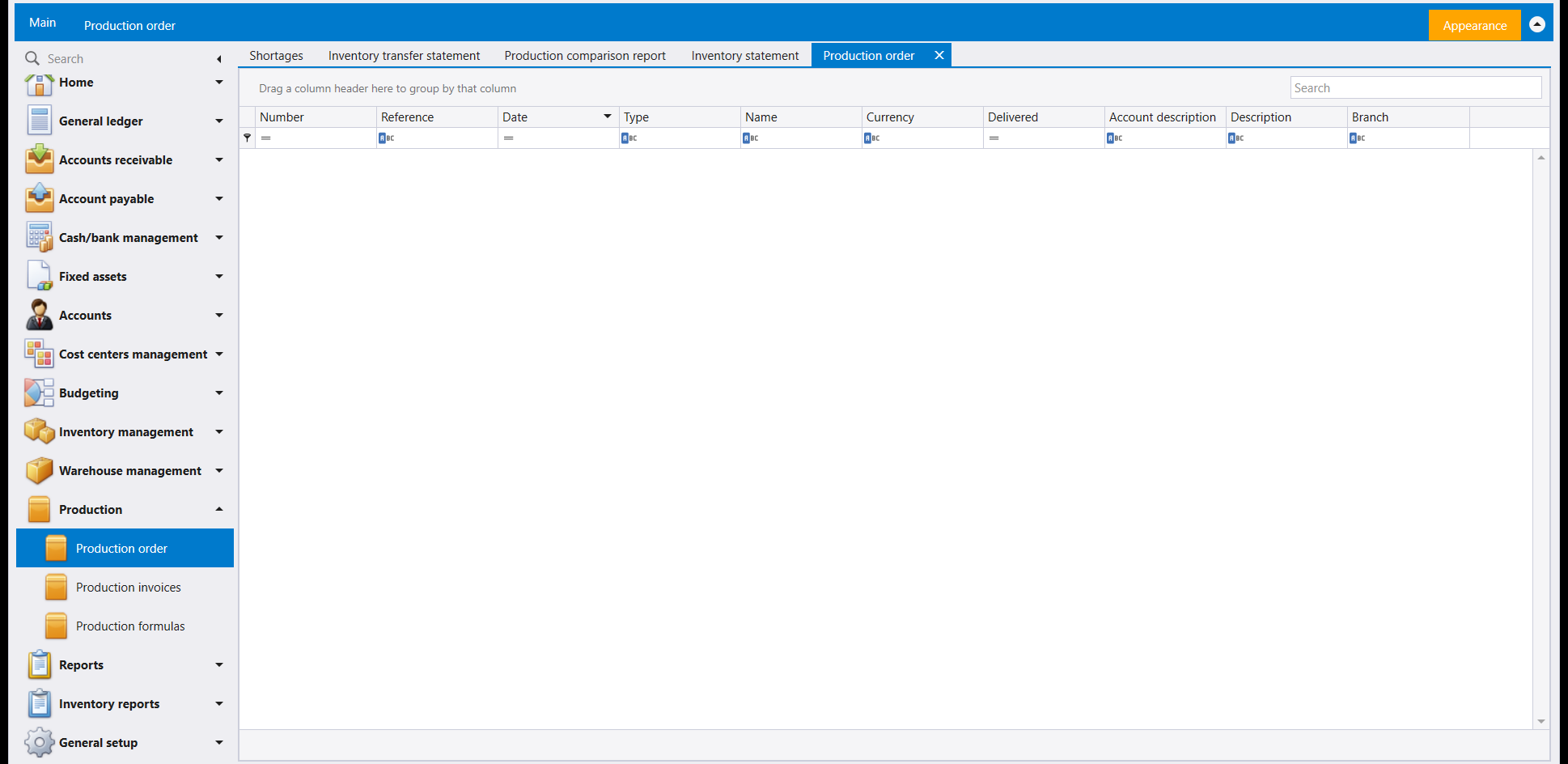
Open Production order itself and this is what you get: a list, one row per order. The columns are Number, Reference, Date, Type, Name, Currency, Delivered, Account description, Description and Branch - who the order is for, in what currency, and whether it has been Delivered.
Which document, when
| Situation | Document |
|---|---|
| A recipe you repeat | Production formula, then Copy → invoice |
| A one-off job, or a dismantle | Production invoice directly |
| A customer or workshop queue | Production order → invoice |
| A fixed set you sell together but never assemble | not production at all - see Items, kits & dismantling |
Next steps
- How to dismantle a whole into parts
- Items, kits & dismantling - production versus accumulation
للإنتاج ثلاث وثائق، والخلط بينها أشيع خطأ على الإطلاق. تكاد تتطابق على الشاشة. وواحدة فقط منها تغيّر مخزونك.
تضمّ Inventory management ← Production كلًّا من Production order وProduction invoices و Production formulas.
الوثيقة التي تُحدِث الأثر: قسيمة الإنتاج
قسيمة الإنتاج (Production invoice) هي الوثيقة التي تحدث فعلًا. تستهلك المادة الخام، وتُنشئ المنتجات، وتعطيها كلفتها، وتحرّك الكميات. وكل ما عداها تحضير.
وتخطيطها يقول ما هو الإنتاج:
Manufactured materialفي الأعلى - ما يخرج. الأعمدة:Number/Symbol/B...وNameوUnitوWarehouseوQuantityوPercentage.Raw materialsفي الأسفل - ما يدخل. الأعمدة:Line numberوNumber/Symbol/B...وNameوUnitوWarehouseوQuantityوPriceوLine priceوNotes.
التصنيع المعتاد يضع أسطرًا كثيرة تحت وسطرًا واحدًا فوق. والتفكيك يعكس ذلك: سطر واحد تحت وأسطر كثيرة فوق. والوثيقة نفسها في الحالتين - راجع كيفية تفكيك الكل إلى أجزاء.
تحمل الترويسة Branch وId وReference وDate وAccount مع عملته وSalesman، وحقول مراكز الكلفة الثلاثة Projects / Sections / Operations. وفي الأسفل Create date وExtra charges وTotal amount.
ويربط Auto Modify Raw Material Quantity الجدولين: غيّر ما تصنعه فتتبعه كمية المادة الخام.
ويضيف الشريط Charges وAttachment وPost To Accounting - فالقسيمة تؤثر على المخزون عند حفظها، وعلى الدفاتر عند ترحيلها.
الوثيقة التي لا تغيّر شيئًا: التركيبة
التركيبة (Formula) وصفة محفوظة. ضع الشاشتين جنبًا إلى جنب فيكون الفرق شيئين اثنين بالضبط:
| التركيبة | القسيمة | |
|---|---|---|
Branch في الترويسة | غائب | موجود |
أعمدة Raw materials | Quantity وNotes | Quantity وPrice وLine price وNotes |
وتلك هي القصة كلها في ملاحظة واحدة. التركيبة تسجّل كميات، والقسيمة تسجّل مالًا. لا فرع للتركيبة لأنها لا تحدث في أي مكان، ولا أسعار لها لأنها لا تكلّف شيئًا. وحفظها لا يحرّك مخزونًا ولا يمسّ حسابًا.
استعمل التركيبة حين تصنع الشيء نفسه مرارًا - خلطة عطر من 3 مل من هذا و4 مل من ذاك. وحين تريد صنعها فعلًا اضغط Copy فيسألك ليبرا: أتكرّرها كتركيبة أخرى أم تحوّلها إلى قسيمة إنتاج؟ اختر القسيمة فيملأ الأسطر ويسعّرها.
أما العمل الذي يختلف كل مرة فلا يحتاج تركيبة أصلًا: ابنِ قسيمة الإنتاج مباشرة. والتفكيك عادةً من هذا النوع، إذ لا يتفكّك حطامان بالطريقة نفسها.
الوثيقة التي هي طلب: أمر الإنتاج
أمر الإنتاج (Production order) تعليمة بالتصنيع - "اصنع لي 100 من هذه". ولا أثر له على المخزون هو الآخر. وُجد ليحتفظ المشغل بطابور مما طُلب منه، ويصير كل أمر قسيمةَ إنتاج عند إنجاز العمل.
وإن لم يطلب منك أحد شيئًا مسبقًا فلا حاجة لك بالأوامر.
رؤية الطابور: لائحة أوامر الإنتاج
افتح Production order نفسها فهذا ما تحصل عليه: لائحة، سطر لكل أمر. والأعمدة هي Number وReference وDate وType وName وCurrency وDelivered وAccount description وDescription وBranch - لمن الأمر، وبأي عملة، وهل Delivered.
أي وثيقة ومتى
| الحالة | الوثيقة |
|---|---|
| وصفة تكرّرها | Production formula ثم Copy ← قسيمة |
| عمل لمرة واحدة، أو تفكيك | Production invoice مباشرة |
| طابور زبائن أو مشغل | Production order ← قسيمة |
| مجموعة ثابتة تبيعها معًا ولا تركّبها أبدًا | ليست إنتاجًا أصلًا - راجع الأصناف والأطقم والتفكيك |
الخطوات التالية
- كيفية تفكيك الكل إلى أجزاء
- الأصناف والأطقم والتفكيك - الإنتاج مقابل التجميع