
Items, kits & dismantlingالأصناف والأطقم والتفكيك
Most businesses buy a thing and sell that same thing. Some do not:
- A breaker buys a wrecked car front and sells the headlight, the fenders, the radiator.
- A perfumer buys litres of liquid and blends bottles.
- A snack bar buys bread, meat and vegetables and sells sandwiches.
- A supermarket sells a shampoo-and-lotion pack for one price.
Libra has two different answers for these, and picking the wrong one is the mistake this guide exists to prevent.
Production: Something is really made
Production: consumes raw material and creates a product. The product gets its own cost, its own stock quantity, and exists in the warehouse as a thing you can count. Ask Libra how many you have and it gives you a number.
That runs in both directions:
- Forward: many materials in, one product out. Blending a perfume. Making a salad in bulk.
- In reverse: one material in, many products out. This is dismantling, and it is how a breaker turns a car front into saleable parts.
The reverse direction is the interesting one, because the parts never existed as purchases. You bought a car front; you never bought an alternator. Production is what creates the alternator as stock, and gives it a share of the front's cost. See How to dismantle a whole into parts.
Accumulation: A bundle that is never assembled
Accumulation: is a bundle several items sold together under one name and one price. A shampoo-and-lotion pack. A meal deal.
The bundle is a virtual item. It has:
- No stock quantity: ask how many bundles you have and the answer is always zero
- No cost of its own
When you sell one, its components appear on the invoice and they come out of stock. The bundle is a convenience at the till: one line instead of three, at a price you set independently of what the parts add up to.
Choosing between them
The question is not what you sell. It is Whether anything is physically made before the sale.
| You | Use |
|---|---|
| Break a car front into parts | production |
| Blend a perfume from liquids | production |
| Make a vat of salad, then ladle it into dishes | production |
| Sell a shampoo + lotion pack, made up at the counter | accumulation |
| Sell a "burger meal" whose parts leave stock on sale | accumulation |
| Assemble sandwiches in the morning and stack them on a shelf | production |
The last two are the pair worth studying. The same sandwich is production if you make it in advance and stock it, and accumulation if it is put together as the customer orders. The physical business decides, not the menu.
A business can use both. Answer it per product, not per company.
Turning them on
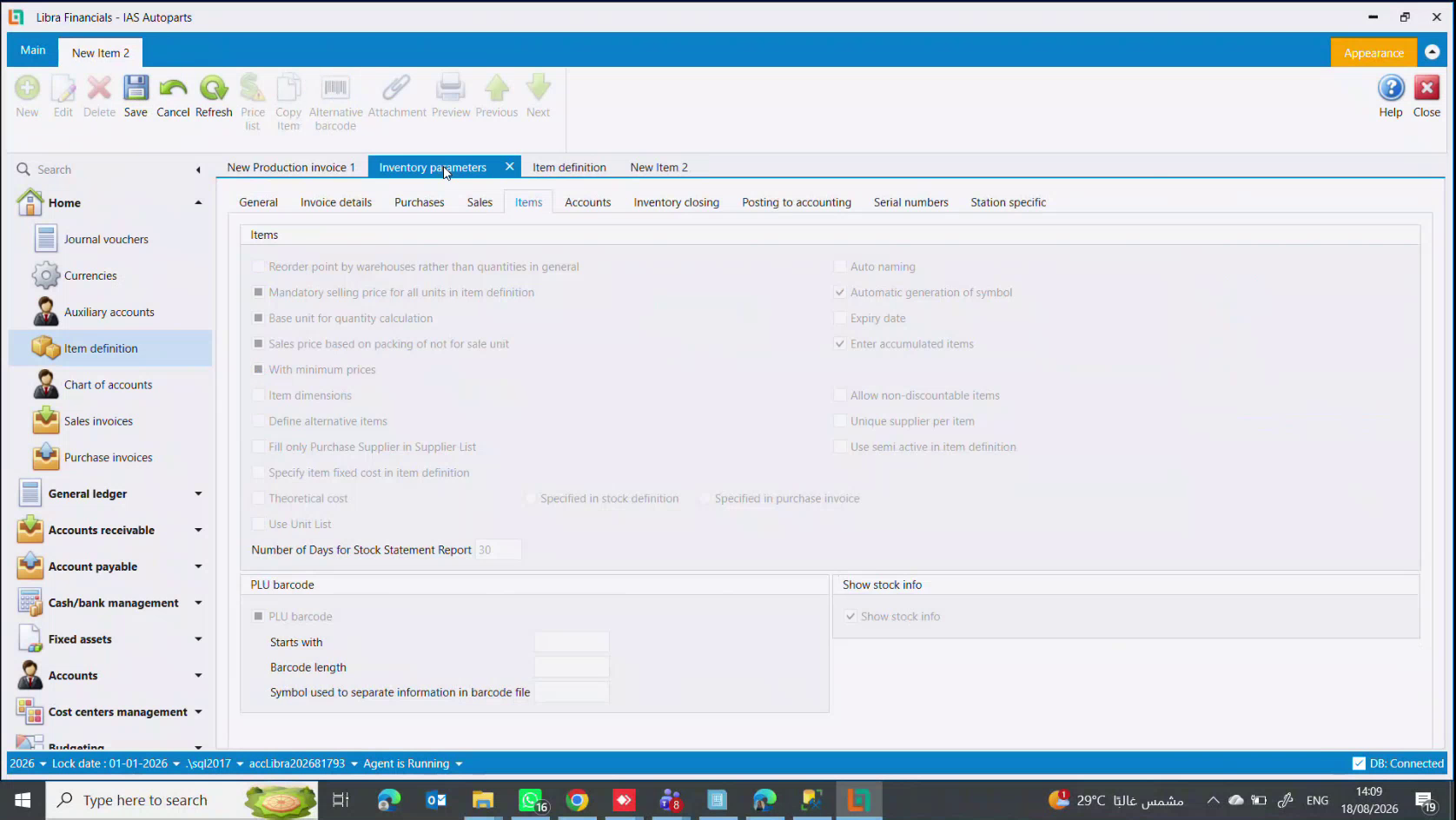
Accumulation is Switched off by default. It appears in Inventory parameters → Items, as Enter accumulated items; the item file then gains an Accumulation tab where the bundle's components are listed.
Production is a licence tier, not a setting. Libra ships in levels, and which you have decides what production can do:
- Basic Production: one product from many raw materials. Enough for a perfumer or a kitchen.
- Advanced Production: many products from many raw materials, with a
Percentagecolumn that splits the source's cost across the outputs. Dismantling needs this level, because dismantling is by definition many products from one material.
If the percentage column is not there, the tier is the reason. Ask Customer Support, it is not a switch inside the application, and no setting you can reach will change it.
The item model underneath
All of this rests on the item file. In brief:
- Families: group items and hand them their accounts Item families
- VAT: is one of three rates, not a yes/no The item definition screen
- Service: items skip the stock check, so labour and fitting never block an invoice
- Units: put litres, millilitres and gallons on one item How to set up units
- Properties: like brand and model year make items reportable Item properties & categories
Next steps
معظم الأعمال تشتري شيئًا وتبيع الشيء نفسه. وبعضها لا:
- كسّار يشتري مقدّمة سيارة محطّمة ويبيع المصباح والرفارف والرادياتور.
- عطّار يشتري اللتر من السائل ويركّب القناني.
- سناك يشتري الخبز واللحم والخضار ويبيع ساندويشات.
- سوبرماركت يبيع عبوة شامبو ولوسيون بسعر واحد.
لليبرا جوابان مختلفان لهذه الحالات، واختيار الخطأ منهما هو الغلط الذي وُجد هذا الدليل ليمنعه.
الإنتاج: شيء يُصنع فعلًا
الإنتاج (Production) يستهلك مادة خام ويُنشئ منتجًا. ينال المنتج كلفته وكميته في المخزون، ويوجد في المستودع كشيء يمكن عدّه. اسأل ليبرا كم عندك منه يعطك رقمًا.
ويجري ذلك في اتجاهين:
- إلى الأمام - مواد كثيرة تدخل ومنتج واحد يخرج. تركيب عطر. صنع سلطة بالجملة.
- بالمقلوب - مادة واحدة تدخل ومنتجات كثيرة تخرج. هذا هو التفكيك، وبه يحوّل الكسّار مقدّمة السيارة إلى قطع قابلة للبيع.
والاتجاه المعكوس هو المثير للاهتمام، لأن القطع لم توجد يومًا كمشتريات. أنت اشتريت مقدّمة سيارة، ولم تشترِ دينامو قط. والإنتاج هو ما يُنشئ الدينامو كمخزون ويعطيه حصته من كلفة المقدّمة. راجع كيفية تفكيك الكل إلى أجزاء.
التجميع: طقم لا يُركَّب أبدًا
التجميع (Accumulation) طقم - عدة أصناف تُباع معًا باسم واحد وسعر واحد. عبوة شامبو ولوسيون. وجبة بعرض خاص.
والطقم صنف افتراضي. له:
- لا كمية مخزون - اسأل كم طقمًا عندك يكن الجواب صفرًا دائمًا
- لا كلفة خاصة به
وحين تبيع واحدًا تظهر مكوّناته على الفاتورة وهي التي تُخصم من المخزون. الطقم تسهيل عند الصندوق: سطر واحد بدل ثلاثة، بسعر تحدّده أنت بمعزل عن مجموع أجزائه.
الاختيار بينهما
السؤال ليس ماذا تبيع. السؤال هل يُصنع شيء ماديًا قبل البيع.
| أنت | استعمل |
|---|---|
| تفكّك مقدّمة سيارة إلى قطع | الإنتاج |
| تركّب عطرًا من سوائل | الإنتاج |
| تصنع وعاء سلطة ثم تغرف منه صحونًا | الإنتاج |
| تبيع عبوة شامبو + لوسيون تُجمَع عند الصندوق | التجميع |
| تبيع "وجبة برغر" تخرج أجزاؤها من المخزون عند البيع | التجميع |
| تحضّر الساندويشات صباحًا وتصفّها على الرف | الإنتاج |
والحالتان الأخيرتان تستحقان التأمل. فالساندويش نفسه إنتاجٌ إن حضّرته مسبقًا وخزّنته، وتجميعٌ إن رُكّب عند طلب الزبون. الواقع المادي هو الذي يقرّر، لا لائحة الطعام.
ويستطيع عمل واحد أن يستعمل الاثنين. أجب عن السؤال لكل منتج لا لكل شركة.
تشغيلهما
التجميع مطفأ افتراضيًا. يظهر في Inventory parameters ← Items باسم Enter accumulated items؛ فيكسب ملف الصنف عندها لسان Accumulation تُدرج فيه مكوّنات الطقم.
أما الإنتاج فمستوى ترخيص لا إعداد. يأتي ليبرا بمستويات، وما تملكه منها يقرّر ما يستطيع الإنتاج فعله:
- الإنتاج الأساسي - منتج واحد من مواد خام كثيرة. يكفي عطّارًا أو مطبخًا.
- الإنتاج المتقدم - منتجات كثيرة من مواد خام كثيرة، مع عمود
Percentageيوزّع كلفة المصدر على المخرجات. ويحتاج التفكيك هذا المستوى، لأن التفكيك بحكم تعريفه منتجات كثيرة من مادة واحدة.
فإن غاب عمود النسبة فالمستوى هو السبب. اسأل مزوّد ليبرا لديك - فهو ليس مفتاحًا داخل التطبيق، ولا إعداد تصل إليه يغيّره.
نموذج الصنف تحت كل هذا
يقوم ذلك كله على ملف الصنف. باختصار:
- العائلات تجمع الأصناف وتسلّمها حساباتها - عائلات الأصناف
- الضريبة واحدة من ثلاث نسب لا نعم/لا - شاشة تعريف الأصناف
- أصناف الخدمة تتخطّى فحص المخزون، فلا تعطّل اليدُ العاملة والتركيب فاتورة
- الوحدات تضع اللتر والمليلتر والغالون على صنف واحد - كيفية إعداد الوحدات
- الخصائص كالماركة وسنة الموديل تجعل الأصناف قابلة للتقرير - خصائص الأصناف وفئاتها