
How to set up units of measureكيفية إعداد وحدات القياس
You buy paint by the gallon and sell it by the millilitre. You buy screws by the box and sell them one at a time. You buy steel by the ton and sell it by the kilo.
Other systems make you open a separate item for each unit and then link them together. Libra puts every unit on the same item, so there is one item, one stock figure, and one cost - and you buy and sell in whatever unit suits.
The grid is on the item's Item definition tab. See The item definition screen for the rest of the screen.
1. Decide the basic unit: always the smallest
The basic unit is the one Libra counts in internally, and it must be the smallest unit you ever deal in. If you sell paint down to the millilitre then the basic unit is the millilitre, even if you have never once bought a millilitre of anything.
Get this wrong and you cannot express the small quantities later without fractions.
2. Add one row per unit
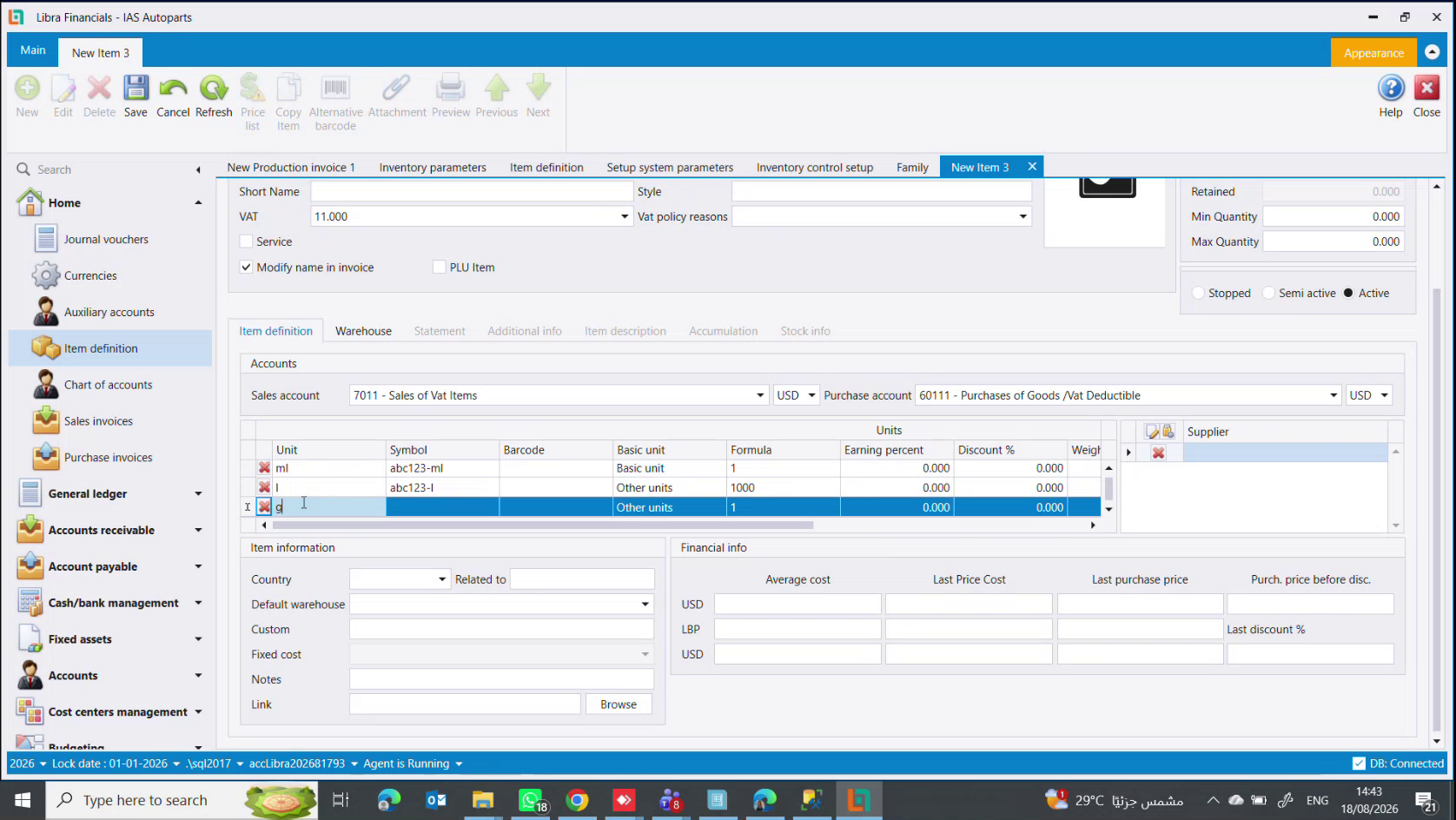
| Column | What to put in it |
|---|---|
Unit | the unit's name - ml, l, gallon 4L |
Symbol | this unit's own code (SKU) |
Barcode | this unit's own barcode |
Basic unit | a dropdown: Basic unit or Other units. Exactly one row is the basic unit |
Formula | how many basic units this unit contains |
Earning percent | the margin for this unit |
Discount % | the standard discount for this unit |
Weight | the unit's weight |
3. Fill in the formula
Formula always answers the same question: how many basic units are in one of these?
With the millilitre as the basic unit:
| Unit | Basic unit | Formula |
|---|---|---|
ml | Basic unit | 1 |
l | Other units | 1000 |
gallon 4L | Other units | 4000 |
gallon 10L | Other units | 10000 |
The basic unit's own formula is always 1.
4. Give each unit its own code
Each row can carry its own Symbol and Barcode, and it is worth doing, because a litre and a gallon of the same paint are different things at the till.
A convention that works: take the item's code and suffix the unit.
| Unit | Symbol |
|---|---|
ml | abc123-ml |
l | abc123-l |
gallon 4L | abc123-g4l |
The Symbol is the item's SKU - the code you find it by, alongside the name and the barcode. You may use a manufacturer's global code (a UPC or EAN printed on the part) or your own numbering. Leave it blank and Libra numbers it for you, if Automatic generation of symbol is switched on - see Item properties & categories.
For a part that legitimately has several codes - a global SKU, your own, and a barcode - use the Alternative barcode button on the ribbon. Be careful: run every item at that level of detail and you will eventually give two items the same code, and then neither scans reliably.
5. Name units so a human can act on them
Call it gallon 4L, not gallon - there are 5-litre and 10-litre gallons too. The name is what you say to the person in the store when you tell them what to fetch, so it has to be unambiguous on its own.
What this replaces
Without units you would buy a 4-litre gallon and then need a production operation just to break it into millilitres before you could sell any. With them, the same item is bought in gallons and sold in millilitres and Libra does the conversion. Reserve production for genuinely making or dismantling something.
Next steps
تشتري الدهان بالغالون وتبيعه بالمليلتر. وتشتري البراغي بالعلبة وتبيعها واحدًا واحدًا. وتشتري الحديد بالطن وتبيعه بالكيلو.
تجبرك أنظمة أخرى على فتح صنف مستقل لكل وحدة ثم ربطها ببعضها. أما ليبرا فيضع كل الوحدات على الصنف نفسه، فيكون هناك صنف واحد ورقم مخزون واحد وكلفة واحدة - وتشتري وتبيع بأي وحدة تناسبك.
الجدول في لسان Item definition من الصنف. وللاطلاع على بقية الشاشة راجع شاشة تعريف الأصناف.
1. حدّد الوحدة الأساسية: الأصغر دائمًا
الوحدة الأساسية (Basic unit) هي التي يَعُدّ بها ليبرا داخليًا، ويجب أن تكون أصغر وحدة تتعامل بها إطلاقًا. فإن كنت تبيع الدهان بالمليلتر فالوحدة الأساسية هي المليلتر، ولو لم تشترِ مليلترًا واحدًا في حياتك.
وإن أخطأت هنا لم تستطع التعبير عن الكميات الصغيرة لاحقًا إلا بالكسور.
2. أضف سطرًا لكل وحدة
| العمود | ماذا تضع فيه |
|---|---|
Unit | اسم الوحدة - ml أو l أو gallon 4L |
Symbol | رمز (SKU) خاص بهذه الوحدة |
Barcode | باركود خاص بهذه الوحدة |
Basic unit | قائمة: Basic unit أو Other units. سطر واحد فقط هو الأساسي |
Formula | كم وحدة أساسية تحتوي هذه الوحدة |
Earning percent | هامش الربح لهذه الوحدة |
Discount % | الحسم المعتاد لهذه الوحدة |
Weight | وزن الوحدة |
3. املأ المعادلة
يجيب Formula دائمًا على السؤال نفسه: كم وحدة أساسية في واحدة من هذه؟
وبالمليلتر كوحدة أساسية:
| الوحدة | Basic unit | Formula |
|---|---|---|
ml | Basic unit | 1 |
l | Other units | 1000 |
gallon 4L | Other units | 4000 |
gallon 10L | Other units | 10000 |
ومعادلة الوحدة الأساسية نفسها هي 1 دائمًا.
4. أعطِ كل وحدة رمزها
يستطيع كل سطر أن يحمل Symbol وBarcode خاصين به، ويستحق ذلك العناء، لأن لترًا وغالونًا من الدهان نفسه شيئان مختلفان عند الصندوق.
وإليك عرفًا ناجحًا: خذ رمز الصنف وألحِق به الوحدة.
| الوحدة | Symbol |
|---|---|
ml | abc123-ml |
l | abc123-l |
gallon 4L | abc123-g4l |
Symbol هو SKU الصنف - الرمز الذي تجده به، إلى جانب الاسم والباركود. ولك أن تستعمل رمز الشركة المصنّعة العالمي (UPC أو EAN مطبوعًا على القطعة) أو ترقيمك الخاص. واتركه فارغًا يرقّمه لك ليبرا، إن كان Automatic generation of symbol مفعّلًا - راجع خصائص الأصناف وفئاتها.
وللقطعة التي لها فعلًا عدة رموز - SKU عالمي وآخر خاص بك وباركود - استعمل زر Alternative barcode في الشريط. وانتبه: إن أدرت كل أصنافك بهذا المستوى من التفصيل فستعطي صنفين الرمز نفسه يومًا ما، ولن يُقرأ أيٌّ منهما بثقة بعدها.
5. سمِّ الوحدات بما يمكن لإنسان أن يتصرف به
سمّها gallon 4L لا gallon - فهناك غالون 5 لتر و10 لتر أيضًا. فالاسم هو ما تقوله للعامل في المستودع حين تطلب منه إحضار شيء، فيجب أن يكون قاطعًا بذاته.
ما الذي يغني عنه هذا
بلا وحدات كنت ستشتري غالونًا سعة 4 لتر ثم تحتاج عملية إنتاج لمجرد تفكيكه إلى مليلترات قبل أن تبيع شيئًا. ومعها يُشترى الصنف نفسه بالغالون ويُباع بالمليلتر ويتولى ليبرا التحويل. واحفظ الإنتاج لصناعة شيء أو تفكيكه فعلًا.