
Structuring a client's chart for audit workتنظيم شجرة حسابات العميل لعمل التدقيق
Two tools handle almost every "I need this split finer" request an audit engagement raises: one extra level in the chart, and an auxiliary record. Knowing which one to reach for - and stopping there - keeps a client's chart short enough to still be readable a year later.
1. Split a mixed account by tax treatment, one level
A single expense account often carries both VAT-eligible and non-eligible postings. Reports built around VAT read the account's own VAT checkbox (see §5 of How to open an account), so a report cannot pull the two kinds of posting apart from one undifferentiated account, and the account's total cannot be checked cleanly against the registered rate (11.000 for a Lebanese company - see §5 of How to set up a company).
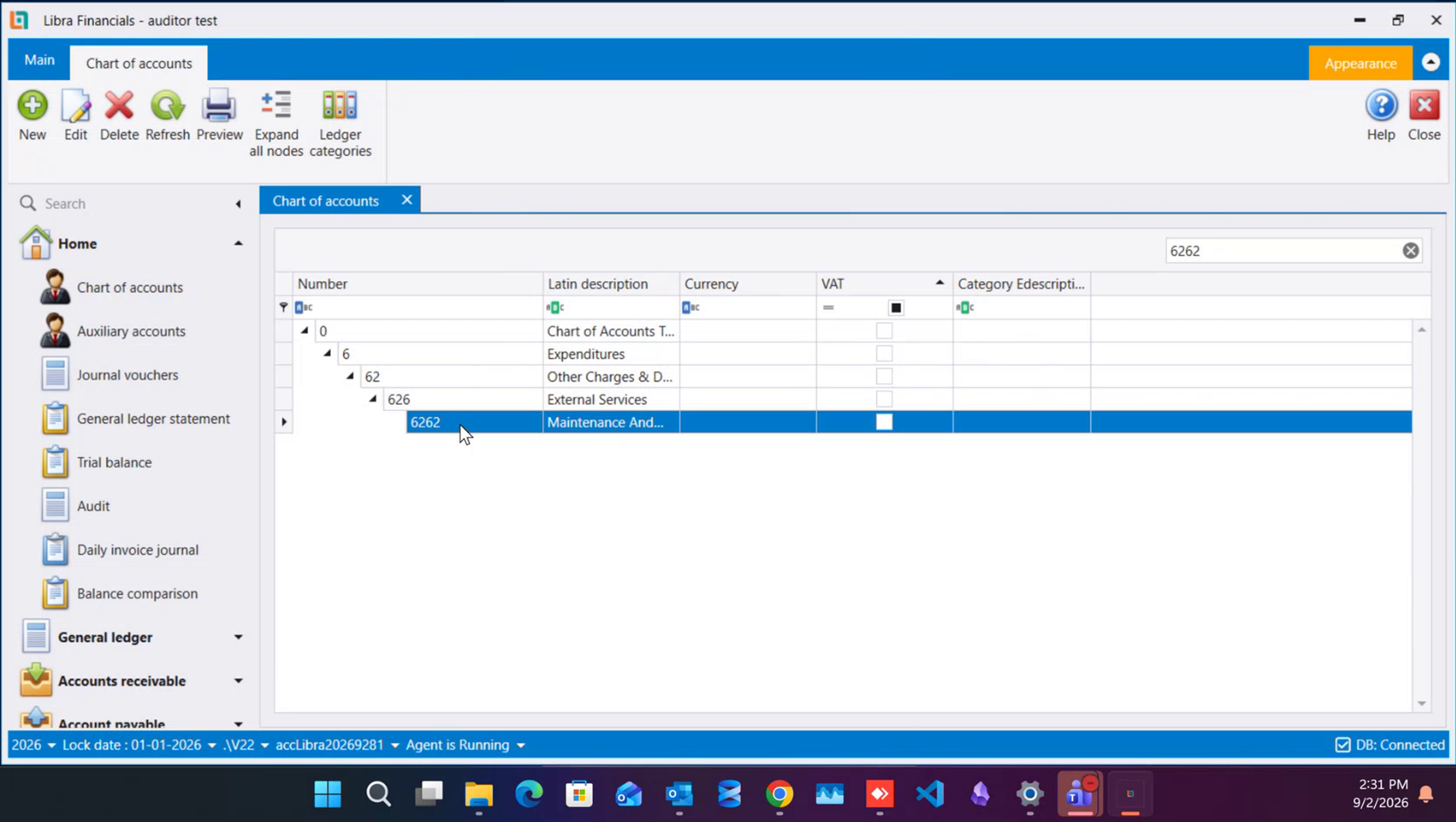
The fix is one extra level. In the worked example below, the account 6262 Maintenance And... starts as a single account with nothing under it:
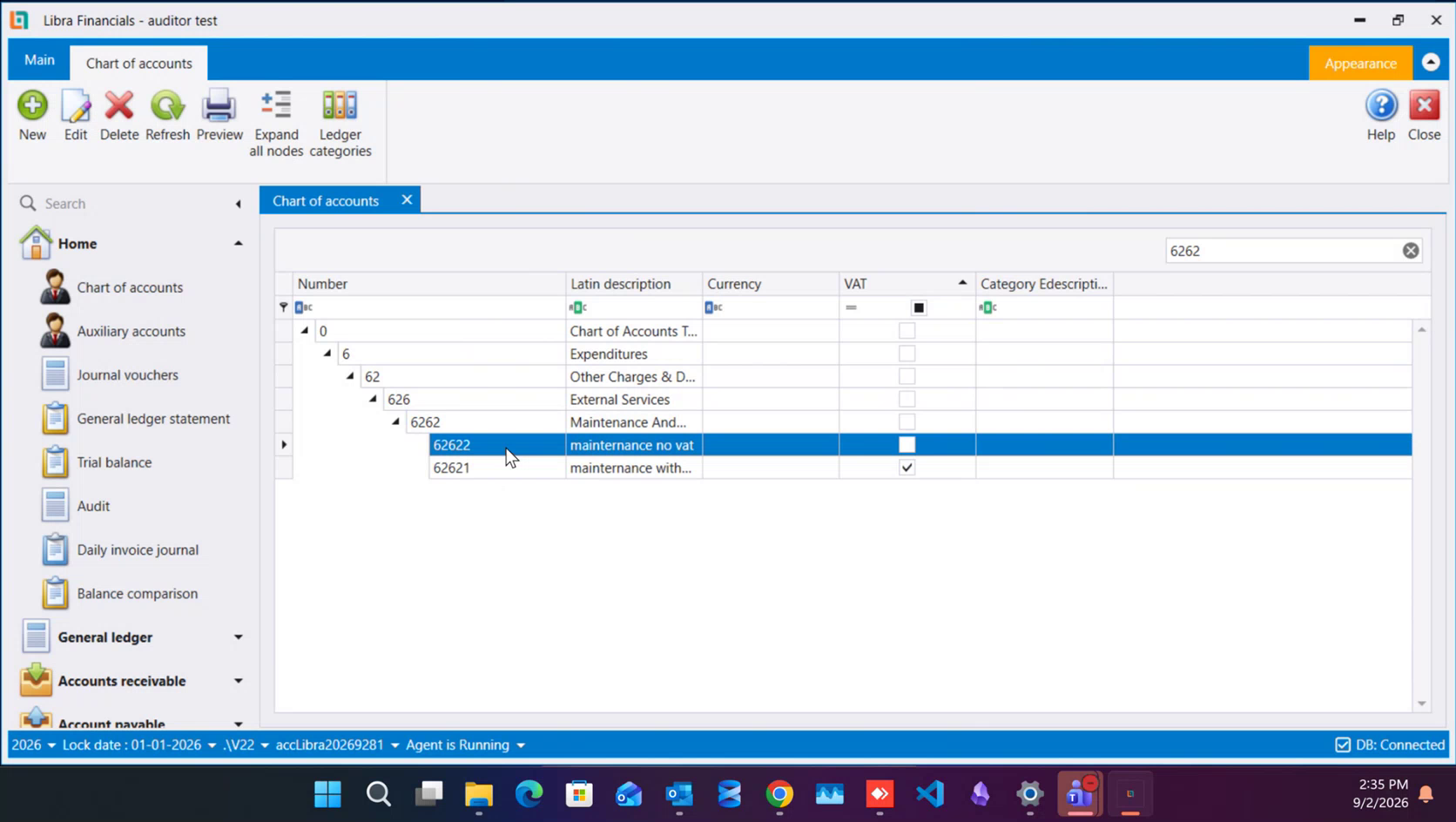
Two children are opened under it - 62621, with VAT ticked, and 62622, with VAT left clear - and the taxable and non-taxable charges are posted to whichever child matches:
Stop at one level. Split exactly the taxable/non-taxable distinction that account needs and post there - don't open a third level under either child. Anything finer than "taxable or not" belongs on an auxiliary record instead, not on another rung of the chart.
2. Reach for PID instead of another chart level
Once a split like that exists, a finer question - which building this maintenance was for, which part of one bill was VAT-eligible - is answered with an auxiliary record on the account, not with a third chart level. Tick PID on the account (§5 of How to open an account) and create the auxiliary records you need.
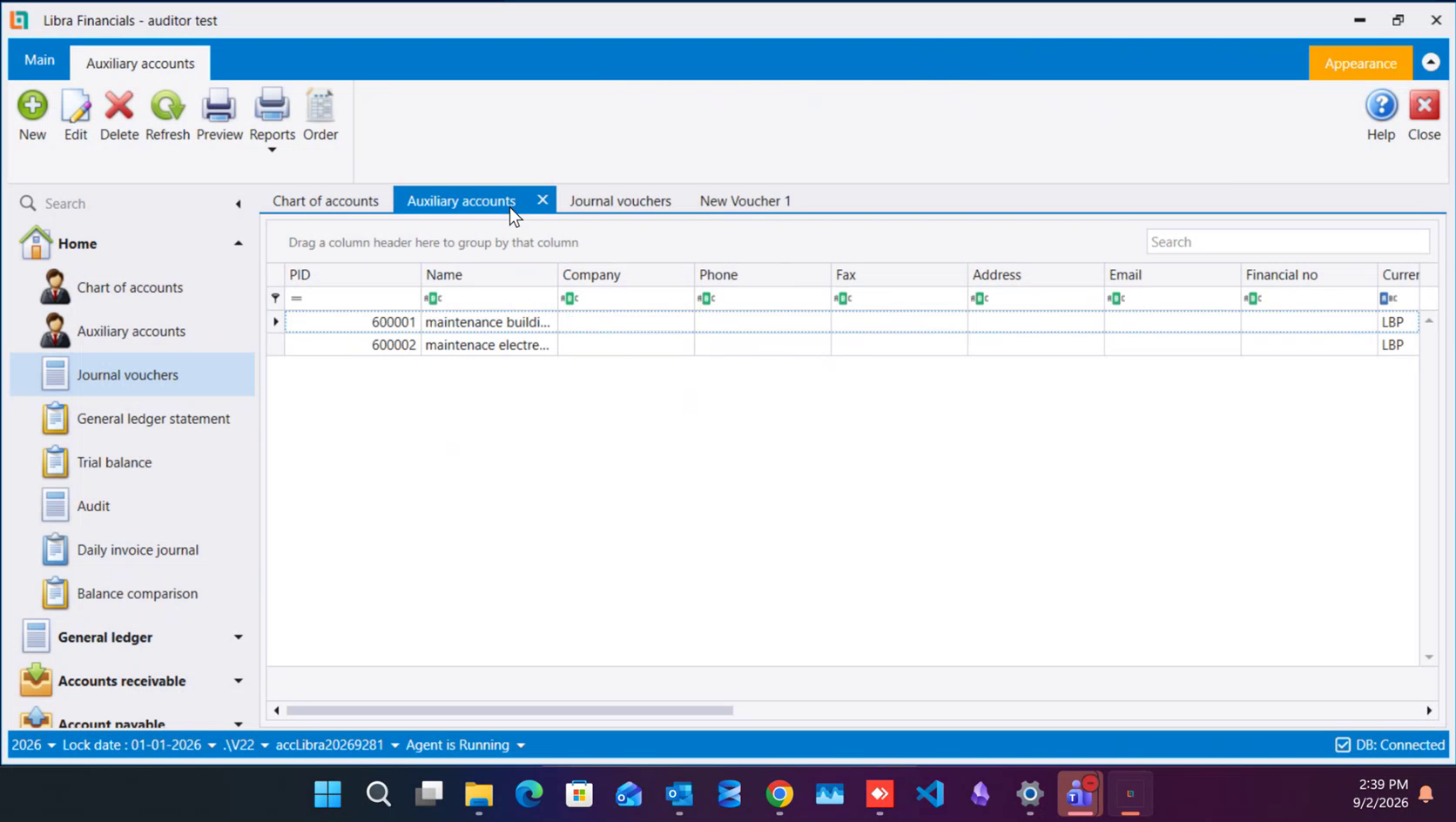
Building-linked maintenance: the taxable child from §1 was opened with PID ticked, and two Other-type auxiliary records were created under it - one naming a building, one naming its electricity - so a maintenance entry can be tagged with which building it belongs to, without a separate account per building.
A bill split without touching the chart at all: a utility bill that has to be divided between a VAT-eligible portion and a municipality-billed portion can be entered as two lines on the very same expense account, each carrying a different Other-type auxiliary record naming its own portion - two lines, one account, told apart by their auxiliary rather than by opening two accounts for one supplier.
3. PID locks the moment it posts
Decide before the first entry, not after. Tick PID while the account still has no postings on it - once one entry has gone through, with or without naming an auxiliary, the setting can no longer be changed (see §5 of How to open an account and Key rules).
4. Why auxiliary accounts exist at all
An inherited chart with one ledger account per client or per supplier is one of the harder things to hand an auditor on day one. The auxiliary layer exists to avoid ever building one: clients, suppliers, employees and banks are not opened as separate chart accounts at all - they are auxiliary records that sit on one shared account for their kind (see The Auxiliary Accounts screen). That is what makes a statement, an ageing report or a Top-10 clients/suppliers list possible without a chart that grows by one account for every party a client ever deals with. A chart built the other way tends to run long enough that unrelated account families end up numbered close together, and every new counterparty means opening another account before you can even post an entry.
5. What is worth filling in for tax and audit work
The auxiliary screen itself is documented field by field in The Auxiliary Accounts screen; three fields are worth flagging for the kind of work an audit engagement does:
- List decides which chart accounts a record can even sit on before you pick one - Clients, Suppliers, Banks, Employees or
Other. - Financial no's small box, filled only when the party is VAT-registered, and Company, the party's full registered name, are what the Top clients/suppliers report prints - see VAT §4. Leave them blank on a party with no fiscal number and tick Non resident instead.
- Each record follows the Currency of the account it is opened on, useful to know when a client works with parties who only ever deal in one currency.
Attachment turns the record into a small archive: scan and attach a trade licence, a VAT certificate, a signed contract, so a document a client hands over during the engagement sits with the party record itself instead of in a separate folder.
See Working across many client companies for building this chart once, in a template company, before copying it into every client.
أداتان تكفيان لمعظم طلبات "أحتاج تقسيم هذا أدق" التي يثيرها عمل التدقيق: مستوى إضافي في الشجرة، وسجل مساعد. ومعرفة أيّهما تستعمل - والتوقف عنده - هو ما يبقي شجرة العميل قصيرة بما يكفي لتبقى مقروءة بعد سنة.
١. قسّم حسابًا مختلطًا حسب المعالجة الضريبية، مستوى واحد
كثيرًا ما يحمل حساب مصاريف واحد قيودًا خاضعة للضريبة وأخرى غير خاضعة معًا. والتقارير المبنية على الضريبة تقرأ علامة VAT الخاصة بالحساب نفسه (انظر القسم ٥ من كيفية فتح حساب)، فلا يستطيع أي تقرير أن يفصل النوعين عن حساب واحد غير مقسَّم، ولا يمكن التحقق من مجموع الحساب بدقة مقابل النسبة المسجَّلة (11.000 لشركة لبنانية - انظر القسم ٥ من كيفية إنشاء شركة).
والحل مستوى إضافي واحد. في المثال المطبَّق أدناه، يبدأ الحساب 6262 Maintenance And... حسابًا واحدًا بلا أبناء بعد:
ويُفتح تحته ابنان - 62621 وعليه علامة VAT، و62622 من دونها - وتُرحَّل القيود الخاضعة وغير الخاضعة إلى الابن الذي يطابقها:
وتوقّف عند مستوى واحد. قسّم بالضبط التمييز بين الخاضع وغير الخاضع الذي يحتاجه ذلك الحساب ورحّل هناك - ولا تفتح مستوى ثالثًا تحت أي من الابنين. وكل تفصيل أدق من "خاضع أو لا" مكانه سجل مساعد، لا درجة أخرى في الشجرة.
٢. استعمل PID بدل مستوى آخر في الشجرة
ومتى وُجد تقسيم كهذا، يُجاب عن سؤال أدق - لأي مبنى كانت هذه الصيانة، أي جزء من فاتورة واحدة كان خاضعًا للضريبة - بسجل مساعد على الحساب، لا بمستوى ثالث في الشجرة. ضع علامة PID على الحساب (القسم ٥ من كيفية فتح حساب) وأنشئ السجلات المساعدة التي تحتاجها.
صيانة مرتبطة بمبنى: فُتح الابن الخاضع للضريبة من القسم ١ وعليه علامة PID، وأُنشئ تحته سجلان مساعدان من نوع Other - أحدهما يسمّي مبنى، والآخر يسمّي كهرباءه - فيمكن لقيد صيانة أن يُعلَّم بأي مبنى يخصّه، دون حساب مستقل لكل مبنى.
تقسيم فاتورة دون لمس الشجرة إطلاقًا: فاتورة خدمة يجب تقسيمها بين جزء خاضع للضريبة وجزء آخر مفوتر من جهة بلدية يمكن إدخالها بسطرين على الحساب نفسه، ولكل سطر سجل مساعد مختلف من نوع Other يسمّي جزأه - سطران، حساب واحد، يفرّق بينهما سجلهما المساعد لا فتح حسابين لمورّد واحد.
٣. يتجمّد PID لحظة أول قيد
احسم أمرك قبل القيد الأول لا بعده. ضع علامة PID ما دام الحساب بلا قيود عليه - فمتى مرّ قيد واحد، بسجل مساعد أو بدونه، لم يعد ممكنًا تغيير هذا الإعداد (انظر القسم ٥ من كيفية فتح حساب والقواعد الأساسية).
٤. لماذا توجد الحسابات المساعدة أصلًا
شجرة موروثة تحمل حسابًا مستقلًا لكل زبون أو مورّد من أصعب ما يُسلَّم لمدقق في يومه الأول. وطبقة الحسابات المساعدة موجودة لتجنّب بناء شجرة كهذه أصلًا: فالزبائن والموردون والموظفون والمصارف لا يُفتحون كحسابات شجرة مستقلة إطلاقًا - بل هم سجلات مساعدة تجلس على حساب واحد مشترك لنوعها (انظر شاشة الحسابات المساعدة). وهذا ما يجعل كشف الحساب وتقرير الأعمار ولائحة أكبر عشرة زبائن/موردين ممكنة دون شجرة تكبر بحساب لكل طرف يتعامل معه العميل. أما الشجرة المبنية بالطريقة الأخرى فتميل إلى الطول لدرجة تجعل عائلات حسابات غير مرتبطة تقع قريبة في الترقيم، وكل طرف جديد يعني فتح حساب آخر قبل أن تستطيع حتى ترحيل قيد.
٥. ما يستحق تعبئته لعمل الضريبة والتدقيق
شاشة الحسابات المساعدة نفسها موثّقة حقلًا حقلًا في شاشة الحسابات المساعدة؛ وثلاثة حقول تستحق الإشارة إليها لنوع العمل الذي يقوم به عمل التدقيق:
- List يحدد أي حسابات الشجرة يمكن أن يجلس عليها السجل حتى قبل أن تختار واحدًا - Clients أو Suppliers أو Banks أو Employees أو
Other. - الخانة الصغيرة في Financial no، وتُملأ فقط حين يكون الطرف مسجَّلًا بالضريبة، وحقل Company، الاسم الرسمي الكامل للطرف، هما ما يطبعه تقرير أكبر الزبائن/الموردين - انظر الضريبة القسم ٤. واتركهما فارغين لطرف بلا رقم مالي وضع علامة Non resident بدلًا منهما.
- يتبع كل سجل عملة Currency الحساب الذي فُتح عليه، وهذا مفيد حين يتعامل العميل مع أطراف لا تتعامل إلا بعملة واحدة.
وAttachment يحوّل السجل إلى أرشيف صغير: أرفق السجل التجاري وشهادة الضريبة وعقدًا موقّعًا، فيبقى المستند الذي يسلّمه العميل أثناء العمل مع سجل الطرف نفسه بدل مجلد منفصل.
راجع العمل مع شركات عملاء كثيرة لبناء هذه الشجرة مرة واحدة، في شركة قالب، قبل نسخها إلى كل عميل.